

Is Wearing Makeup A Sexual Signal
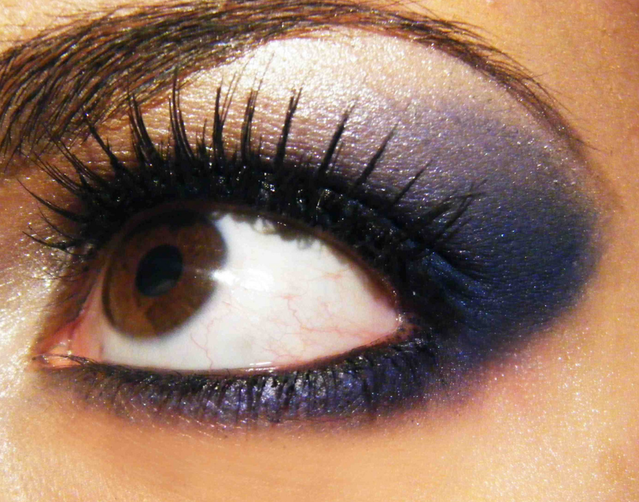
Nothing like a skillful makeup exam
Source: Flickr/xtina5645
Being wrong is costly. If I retrieve you're aggressive when you're not, I will carry inappropriately around you and incur costs I demand not face up. If I think you can assist me when y'all tin can't, I will hinder achieving my goals and give up on my search to find valuable assistance. However, people are wrong constantly. Being wrong itself isn't that unusual, as it takes the proper cognitive faculties, time, and energy to be right. The world is just a messy identify, and there are opportunity costs to gathering, scrutinizing, and processing information, likewise as diminishing returns on that search. Beingness wrong is plush, only so is being right, and those costs need to be counterbalanced against each other, given limited resource. What is unusual is when people are systematically wrong almost something; when they're wrong in the same detail direction. If, say, 90% of people believe something incorrectly in the aforementioned way, that's certainly a strange state of diplomacy that requires special kinds of explanations.
As such, if you believe people are systematically wrong about something, in that location are two things y'all should probably practice: (1) earnestly assess whether your belief almost them being wrong is accurate – since it's ofttimes more likely y'all're wrong than everyone else is – and so, if they actually are wrong, (two) attempt to furnish the proper caption for that state of affairs and test it.
Putting that in an example I've discussed before, some literature claims that men over-perceive women'south sexual interest (here). In other words, the belief hither is that many men are systematically incorrect in the same way; they're making the aforementioned error. I special explanation provided for this was that men over-perceiving sexual interest would lead them to approach more women (they otherwise wouldn't) and ultimately get more than mating opportunities as a event. Then men are wrong because being wrong brings more benefits than costs. There are some complications with that explanation, withal. First, why would nosotros expect men to not perceive women'south interests more accurately (she's not interested in me) but approach them anyway (the odds are depression, but I might besides go for information technology)? That would lead to the same end point (approaching lots of women) without the inaccuracy that might accept other consequences (similar failing to pursue a adult female who'southward actually interested considering you mistakenly believe a different adult female is interested when she isn't). The special caption as well falls autonomously when you consider that when you ask women almost other women's sexual involvement, yous get the aforementioned result every bit the men. And so either men and women are over-perceiving women'south sexual interest, or perhaps they aren't wrong. Perhaps private women are under-reporting their own interest for some social reasons. Maybe the women's self-reports are inaccurate (consciously or non), rather than anybody else beingness wrong virtually them. The explanation that ane person is wrong, rather than everyone else is, feels more plausible.
Speaking of women's sexual interest and people beingness wrong, let's talk about a new paper touting the idea that everyone is wrong nearly women's makeup usage. Specifically, lots of people seem to exist using makeup usage as a cue to a woman'due south curt-term sexual involvement, and the researchers believe they're all wrong to practice so. That makeup is an invalid cue of sociosexuality.

Aren't they all...
Source: Flickr/Moonez
This was highlighted in 3 studies, which I'll cover quickly. In the get-go, 69 women were photographed with and without their day-to-day makeup. Raters - 182 of them - judged those pictures in terms of (one) how much makeup they felt the women were wearing, (2) how bonny the faces were, and (3) how much they felt the women pictured would be comfortable with and savour having casual sex with unlike partners; a measure out of sociosexuality. The results showed that male person (d = 0.64) and female (d = 0.88) raters judged women with makeup as more than attractive than same women without, and likewise that the women wearing makeup were more comfortable with casual sex than without. For those curious, this latter difference was larger for female raters (d = 1.14) than male ones (d = 0.32). Putting that into numbers, men rated women wearing makeup every bit about 0.ii points more likely to enjoy casual sexual activity on a scale from i-9; for women, this difference was closer to 0.5 points. Further, men'southward perceptions of women's interest in coincidental sex seemed to be driven less by makeup per se, as much every bit information technology was driven by a woman's perceived attractiveness (and since makeup made them expect more than attractive, they also looked more interested in coincidental sex). The primary finding here, however, is that the perception was demonstrated: people (men and women) use women's makeup usage as a cue to their sociosexuality.
Also, men were worse at figuring out when women weren't wearing any makeup, compared to women probable given a lack of feel with the topic. Here, beingness wrong isn't surprising.
The second study asked the women wearing the makeup themselves to answer questions nigh their ain sociosexuality (using several items, rather than a single question). They were also asked about how much time they spent applying makeup and how much they spent on it on each calendar month. The primary result here was a reported lack of correlation between women'southward scores on the sociosexuality questions and the time they spent applying makeup. In other words, people idea makeup was correlated to sexual attitudes and behaviors, but it wasn't. People were wrong, just in predictable means. This ought to require a special kind of caption, and we'll go to that before long.
The final study examined the relationship between people's perceptions of a woman'due south sociosexuality and her own cocky-reports of it. Both men and women once more seemed to go it wrong, with negative correlations showing upward between perceived and self-reported sociosexuality. Both went in a consequent management, though merely the male person correlations were pregnant (male person raters about r = -0.33; female raters r = -0.21). Once attractiveness was controlled for, yet, the male person correlation was similarly non-significant and comparable to women's ratings (average r = -0.22).
The full general pattern of results, descriptively, is that men and women seem to perceive women wearing makeup equally beingness more interested in casual sexual practice than women not wearing makeup. However, the women themselves don't self-report being more interested in casual sex; if anything, they report being less interested in it than people perceive. Isn't information technology funny how so many people are consistently and predictably wrong about this? Possibly. So once again, I think in that location'southward more to say nigh the matter which isn't explored in much detail inside the paper.

"This paper is an invalid cue of the truth"
Source: Flickr/Jason Truscott
The get-go criticism of this research that jumped out at me is that the researchers merely recruited women who used makeup regularly to be photographed, rated, and surveyed. In that context, they report no relationship between makeup utilize and sociosexuality (which nosotros'll get to in a minute, every bit that'southward another of import thing). Restricting their sample in this manner naturally reduces the variance in the population, which might make it harder to observe a real relationship that really exists. For example, if I was curious whether peak is an of import factor in basketball skill, I might observe dissimilar answers to this question if I surveyed the general population (which contains lots of tall and short people) than if I just surveyed professional person basketball game players (who all tend to be taller than average; frequently essentially so). To the authors' credit, they exercise mention this betoken…in their discussion, as more than of an reconsideration. This suggests to me the indicate was raised by a reviewer and was only added to the paper after the fact, every bit awareness of this sampling issue would usually encourage researchers to examine the question in advance, instead of but note that they failed to practise so at the end. So, if a relationship exists betwixt makeup use and interest in casual sex, they might have missed it through selective sampling.
The second large criticism concerns the actual reported results, and past how much that finding was missed. I detect it noteworthy how the researchers interpret the correlation betwixt women'southward cocky-reported time applying makeup and their self-reported sociosexuality. In the statistical sense, the correlation is about equally close to the significant threshold as possible; r = .25, p = 0.051. Every bit the cut-off for significance is 0.05 or lower, this is a relationship that could (and likely would) exist interpreted as evidence consequent with the possibility that a link between makeup usage and sociosexuality does exist, if one was looking for a connectedness; that makeup use is, potentially, a valid cue of sexual interests and behaviors. Nevertheless, the authors interpret information technology as "not significant" and title their newspaper accordingly ("Makeup is a FALSE signal of sociosexuality", accent mine). That's not wrong, in the statistical sense. It also feels like a rather bold clarification for data that is a hair's breadth away from reaching the opposite determination, and suggests to me the authors had a rather specific hypothesis going into this. Again, to their credit, the authors note at that place is a "trend" there, but that stands in stark contrast to their rather dramatic title and repeated claims that makeup is an invalid cue. In fact, every instance of them noting at that place's a trend betwixt makeup use and sociosexuality seems to exist followed invariably past a claim that the results suggest at that place is no relationship.
Further, there is a point never really discussed at all, which is that women might under-report their own sociosexuality, as per the original research I mention, peradventure because they're wary of incurring social costs from being viewed every bit promiscuous. In many domains, I would default to the assumption that the self-reports are somewhat inaccurate. For example, when I surveyed women about their cocky-perceived attractiveness (from one-x) several years dorsum, not a unmarried one rated herself below a 6 (out of 10), and the average was higher than that. Either I had managed recruited a sample of particularly beautiful women (possible) or people are interested in you believing they're better than they actually are (more probable). After all, if yous believe something inaccurately nigh a person that'due south flattering, while it may be a cost to you lot, it'south a benefit to them. So what'due south more likely: that everyone believes something that's incorrect almost others, or that some people misrepresent themselves in a flattering light?

Doesn't get much more flattering than that
Source: Flickr/Marufish
As a final note on explaining these findings, information technology is worth exploring the possibility that a woman'south physical bewitchery/makeup employ actually is correlated with relatively higher sociosexuality (despite the author's claims this isn't truthful). In other words, people aren't making a perceptual mistake - the general correlate holds truthful – but the current sample missed it for whatsoever reason (fifty-fifty if simply barely). Indeed, at that place is some evidence that more than attractive women score slightly college on measures of sociosexuality (N = 226; Fisher et al, 2016. Ironically, this was published in the aforementioned journal 2 years prior). While short-term encounters exercise acquit some adaptive costs for women, this minor correlation might arise due to more physically-attractive women receiving offers for short-term encounters that can better offset them. At the very least, it could be expected that because attractive women carry more value in the mating market identify these offers are, in principle, more than numerous. Increasing numbers of improve options should equal greater comfort and involvement.
If that is true – that bewitchery does correlate in some small way with sociosexual orientation – then this could also assistance explain the (besides fairly modest) correlation between makeup usage and perceived sociosexuality: people view attractive women equally more than open to short-term encounters, makeup artificially increases attractiveness, then people judge women wearing makeup as more open to curt-term encounters than they are.
We can even go ane layer deeper: women generally understand that makeup makes them look more bonny. They also empathize that the more attractive they look, the more than positive mating attending they'll probable receive. Applying makeup, then, can be an attempt to attract mating attending, in much the same way that I might wear a prissy suit if I was going on a job interview. However, neither the suit nor the makeup is a "smart bomb", and then to speak. I might article of clothing a conform to attract the attention of specific employers, but just considering I'one thousand wearing a suit that doesn't hateful I want whatsoever job (and if Taco Bell wanted to rent me, I might exist choosy and say "No thank you"). Similarly, a adult female wearing makeup might be interested in attracting mating attention from specific sources – and be perceived as being more sexually motivated, accordingly – without wishing to transport a global signal of sexual involvement to all bachelor parties. That latter part just happens as a byproduct. Nevertheless, in this narrower sense, makeup usage could rightly be perceived as a sign of sexual signaling; maybe i that ends upwards getting perceived a scrap more broadly than intended.
Or maybe it's not fifty-fifty perceived more broadly. The question asked of raters in the written report was whether a woman would exist comfortable and enjoying having coincidental sex with different partners; it's unspecified as to the nature of those partners. "Unlike" doesn't mean "just anyone". Women who are interested in makeup might be slightly more interested in these pursuits, on average…simply merely and so long equally the partners are suitably attractive.
Source: https://www.psychologytoday.com/us/blog/pop-psych/201810/is-makeup-valid-cue-sociosexuality
Posted by: melsonbacte1966.blogspot.com
0 Response to "Is Wearing Makeup A Sexual Signal"
Post a Comment